Meme coin trading can turn small stakes into six figures when you treat it as a system, not a lottery
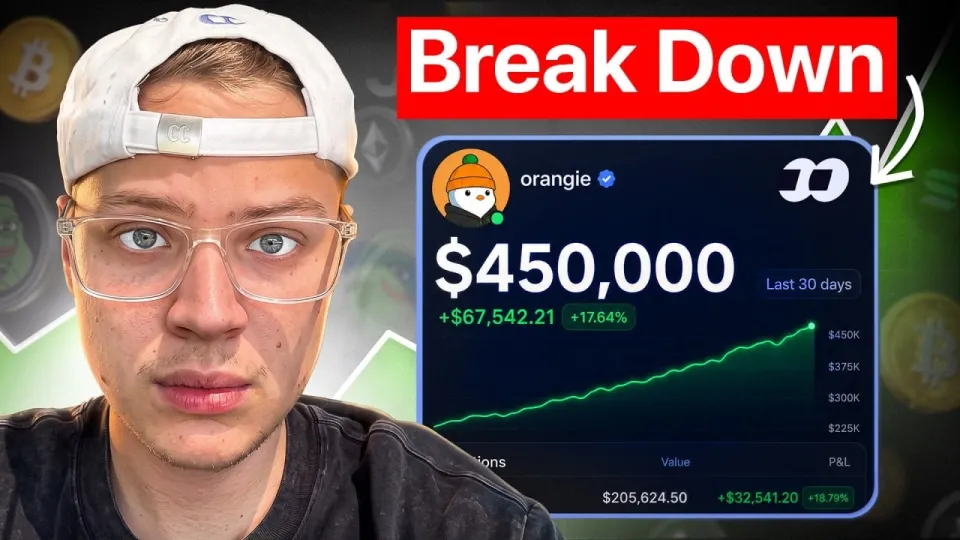
Video: How I Made $450,000 Trading Memecoins in 30 Days
Need articles like this for your video? They help promote it on YouTube and Google — order them in the Telegram bot @sat_sit_bot. It writes articles around your video, embeds the video and publishes them on popular niche websites (no ads). Free trial — 50 articles.
· based on the channel Orangie Web3
Key takeaways
- A trader on the Orangie Web3 channel reported turning a small bankroll into $450,000 in 30 days by trading Solana memecoins.
- Most memecoin buyers lose money: one viewer lost 90% of a $100 stake before tripling it on a single coin called AMC.
- The core edge is speed and information: top traders share calls in private groups and snipe new launches before retail sees them.
- Tools like FOMO (fomo.family) and paid communities such as Kaizen Group are marketed as ways to copy or follow experienced traders.
- Survivorship bias is real: the $450K result is one outcome among thousands, and the same strategy can wipe out an account.
Meme coin trading is the practice of buying and selling tokens with no fundamental value, driven purely by community hype, and it can produce extreme returns like the $450,000 in 30 days reported by the Orangie Web3 channel — but only for a tiny fraction of participants. The same market that made that profit also routinely wipes out 90% or more of a beginner's stake, as one viewer described losing almost all of a $100 position before a single lucky hit on a coin called AMC tripled the remainder. If you want to understand how the game actually works, start with the paid community the channel promotes: Kaizen Group on Whop is where the trader shares calls and trade breakdowns.
What a meme coin actually is and why it moves so fast
A meme coin is a cryptocurrency launched with no product, no revenue, and no roadmap — its price is set entirely by attention. Dogecoin proved the model in 2013, and the 2024–2026 cycle turned it into an industry on Solana, where anyone can mint a token in minutes for a few dollars. Because supply is effectively unlimited and liquidity is thin at launch, a meme coin can go from a $10,000 market cap to $10 million in hours, then collapse to zero just as fast. The trader in the Orangie Web3 video focuses on these Solana launches because the speed of the chain keeps fees low and lets him enter and exit within seconds. That speed is also the trap: by the time a coin trends on social media, the earliest buyers are often already selling into the crowd.
How the $450,000 in 30 days was actually made
The reported $450,000 result came from a high-frequency approach: many small entries, a few large winners, and strict cutting of losers. The trader describes scanning dozens of new Solana pairs daily, buying only when he sees a specific pattern — a fast-growing holder count, a credible narrative (like the "chill guy" meme), and volume that isn't obviously wash-traded. Most positions are closed within minutes; the rare coin that graduates to a larger exchange or goes viral is held longer. This is not investing in the traditional sense. It is closer to scalping a volatile asset with a defined maximum loss per trade, and the profit comes from the asymmetry: losing $200 on ten coins and making $50,000 on one. The channel's own framing — "you can lose everything and then you just need one hit" — is accurate but incomplete, because the hit only matters if you still have capital when it arrives.
The information edge: private groups and sniping
A recurring criticism in the video's comments is that the trader is part of a private Discord where top traders share calls and snipe coins together before the public sees them. That criticism is largely fair, and it describes the real structure of the memecoin market. The earliest buyers on a new token are often coordinated groups using bots to buy in the same block as liquidity is added; retail traders see the coin minutes later, after the first 2x or 5x has already happened. The Orangie Web3 channel links its own Discord (discord.gg/memecoins) and a trading platform called FOMO (fomo.family/r/orangie) that lets users copy or follow other traders' positions. Access to faster information is a genuine advantage, but it is not a guarantee — even insiders get dumped on when a developer pulls liquidity or a larger group decides to exit first.
Why most beginners lose money on meme coins
Most beginners lose because they buy attention instead of a setup, and they size positions emotionally. One viewer in the comments described putting in $100, learning the mechanics, and losing 90% before a lucky AMC trade saved the account. That sequence is typical: the first few trades are experiments, the losses feel small, and then a single win creates the illusion of skill. The structural problems are worse than bad luck. New tokens often have hidden taxes, mint authorities that let the developer create unlimited new supply, and liquidity that can be removed in one transaction. A trader who does not check these basics is not trading — they are donating. The $450,000 result exists, but so do thousands of accounts that went to zero in the same month, and those accounts do not post videos.
Practical rules that separate trading from gambling
Trading memecoins becomes a repeatable process only when you define risk before entry and refuse to improvise. The traders who survive long enough to catch a large winner tend to follow a small set of rules:
- Cap each position at 1–2% of your total bankroll, so ten consecutive losses cost less than 20% of the account.
- Check the contract before buying: revoke mint authority, confirm liquidity is locked or burned, and scan for holder concentration above 20% in a single wallet.
- Set a hard stop at -30% to -50% and take partial profits at 2x and 5x rather than waiting for a 100x.
- Trade only coins with at least a few hundred holders and organic volume; a token with 50 holders and $2 million in volume is usually a bot wash-trading itself.
- Keep a written log of every entry, exit, and reason, because memory rewrites losses as "almost wins."
These rules do not make you $450,000 in a month. They make it possible to still be trading after the month is over, which is the actual prerequisite for a large outcome.
The viewer questions that come up most often
The most common doubts from the channel's audience are about speed, comprehension, and whether the results are real. Many viewers say the explanations move too fast and jump between points, which is a fair critique of a video built around live trading. Others ask how to know which coin to pick, and the honest answer is that picking is the hardest part — the trader's edge comes from seeing hundreds of launches and recognizing patterns, not from a formula. A third group asks whether FOMO or a paid group is necessary, and the answer is that tools reduce friction but do not replace judgment; a copy-trading platform can just as easily copy a losing trade. Finally, viewers who lost money early want to know if they should quit, and the useful reframe is that a small loss during the learning phase is tuition, while a large loss after a win is usually a sizing mistake.
Useful links
- Kaizen Group on Whop — paid community with trade calls and breakdowns.
- FOMO trading platform — copy-trading and memecoin trading interface.
- Orangie Discord — the channel's community chat.
- Orangie on Instagram — short-form updates.
Final takeaway
The $450,000 in 30 days is a real outcome reported by the Orangie Web3 channel, but it is a tail result produced by high trade frequency, fast information, and strict loss control — not by a secret coin. Treat memecoin trading as a speculative skill with a long learning curve, size every position so a zero does not end your account, and use the Kaizen Group checkout link only if you want to study how an experienced trader structures entries and exits. The channel's value is in showing the process, not in promising the result.
Questions & answers
Can you really make $450,000 trading meme coins in 30 days?
It is possible but extremely rare. The trader in the Orangie Web3 video reports that result from many small trades and a few large winners, and the same approach produces total losses for most participants. Treat it as a tail outcome, not an expected return.
Do you need a paid group or a copy-trading platform to trade meme coins?
No, but tools like FOMO and private communities reduce the information gap by showing what experienced traders are buying. They do not replace risk management, and copy-trading can replicate losses just as easily as wins.
Why do most beginners lose 90% of their money on meme coins?
Beginners usually buy after the price has already moved, size positions too large, and skip contract checks like mint authority and liquidity locks. A single lucky win can then create overconfidence that leads to a larger loss.
What should I check before buying a new Solana meme coin?
Verify that mint authority is revoked, liquidity is locked or burned, and no single wallet holds more than about 20% of supply. Also confirm that trading volume and holder count are organic rather than bot-generated.
Source: How I Made $450,000 Trading Memecoins in 30 Days · Markdown version